
How to Take on More Risk!

Don't! Transfer risk to YOUR insurance company. Who wants risk? I've never heard a business owner say, "I want to go find more risk today." And if they did, you don't go looking for Risk in a store. As a business owner there are different types of risk faced regularly, some Risks may not keep you up at night while other risks may keep you up every night!
Risk is the possibility of loss, harm, or negative impact, often defined as the combination of the likelihood of an event and the severity of its consequences, or liability. It's a core concept in risk management, where threats are identified, assessed, and eventually priced by insurance company underwriters and actuaries in order to protect against potential losses.
Some may say, "I'll let the insurance company / the commercial carriers take on these risks." That may be appropriate in some instances. At what price? At what sunk cost?
Insurance is the age-old strategy utilized to mitigate potential harm, with age-old consequences:
- Insurance companies are increasingly profitable.
- Insurance premiums keep going up.
- More exclusions are added. Less coverage at a greater expense.
- Premiums become a sunk cost to the insured.
The age-old industry can be broken into three types of insurance which may be utilized today.
1.Commercial Insurance.
2.Informal self-insurance.
3.Formal Self-insurance.
Commercial Insurance is seen, understood, and in place all around the marketplace. Insurance companies are some of the most advertised, recognized, and profitable companies in the world. Insurance companies listed below in the United States combined annual premium in 2024 was $502,775,277,000. Five Hundred BILLION Dollars.
Top 10 Writers Of Property/Casualty Insurance By Direct Premiums Written, 2024
| Rank | Group/company | Direct premiums written (1) |
|---|---|---|
| 1 | State Farm | $108,976,155,000 |
| 2 | Progressive | $75,884,809,000 |
| 3 | Berkshire Hathaway Inc. | $62,297,165,000 |
| 4 | Allstate Corp. | $55,859,006,000 |
| 5 | Liberty Mutual | $42,753,028,000 |
| 6 | Travelers Companies Inc. | $41,852,540,000 |
| 7 | USAA Insurance Group | $36,093,612,000 |
| 8 | Chubb Ltd. | $32,292,201,000 |
| 9 | Farmers Insurance Group of Companies | $28,288,709,000 |
| 10 | Zurich | $18,478,052,000 |
(1) Before reinsurance transactions, includes state funds.
(2) Based on U.S. total, excluding territories.
Source: NAIC data, sourced from S&P Global Market Intelligence, Insurance Information Institute.
These companies didn't start at these levels of premium. They grew to this level of premiums, retained earnings, and surplus.
The commercial market is very happy to take on your risk.
Informal self-insurance minded business owners will often say, "As the business owner, I'm taking on that risk." This statement is accurate, and business owners who take on risks this way are ok, until there is a loss, and the business owner must cover that loss.
There are no premiums, yet the cost of covering these risks are extensive. Typically, losses are covered from operating company assets, up to the point where there are operating company assets to draw from.
Formal self-insurance is less known to the public as coverage is not initially offered to the public. However, this multi-billion dollar business is insuring the same risks – Formally as risk is transferred to your own company. This formal self-insurance company which YOU own takes on the risk. This formal self-insurance is Captive Insurance. Your insurance company should be profitable just like the commercial carriers. In the future, your insurance company could become a commercial carrier.
And how is that Formal risk protected? Through YOUR own Captive insurance company, which is also backed up with re-insurance. Reinsurance is in place with a variety of layers: specifically other Formal Self-Insurance Companies, Capital, and policy limits. Each of these components are in place to protect you. Regulators, underwriters and actuaries analyze and ultimately price the various exposures of each individual operating company both in the Commercial marker as well as the Captive marketplace.
What Is Risk Management?
Risk management is the systematic process of identifying, assessing, and mitigating threats or uncertainties that can affect your organization. It involves analyzing risks' likelihood and impact, developing strategies to minimize harm, and monitoring measures' effectiveness.
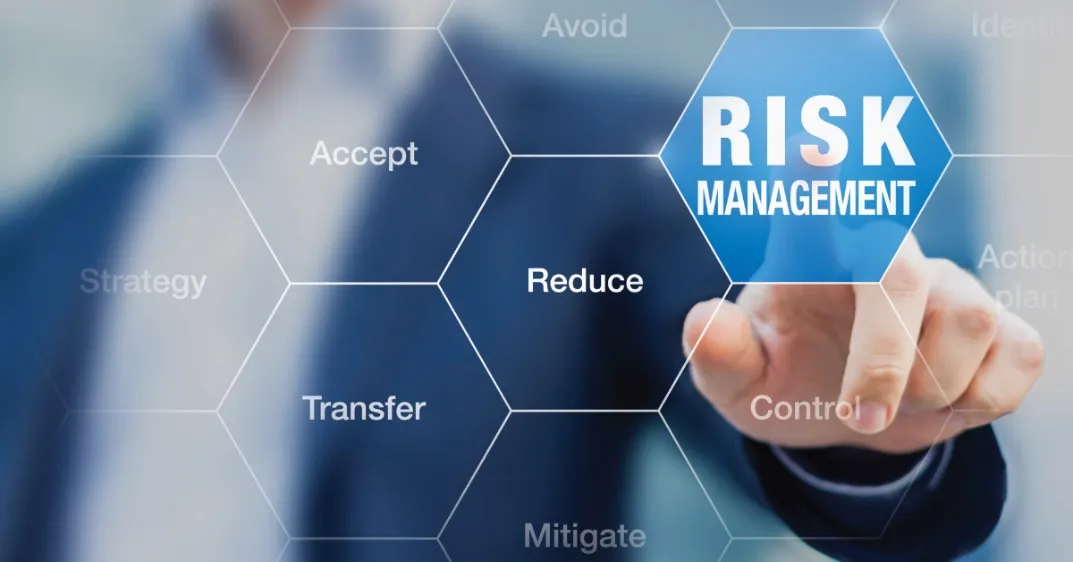
Your Risk Management program may include some of, or all three types of insurance. Let's build an efficient, profitable, flexible Risk Management program for you and create
Your Link to Security!